Roger Capron Ceramic Coffee Table
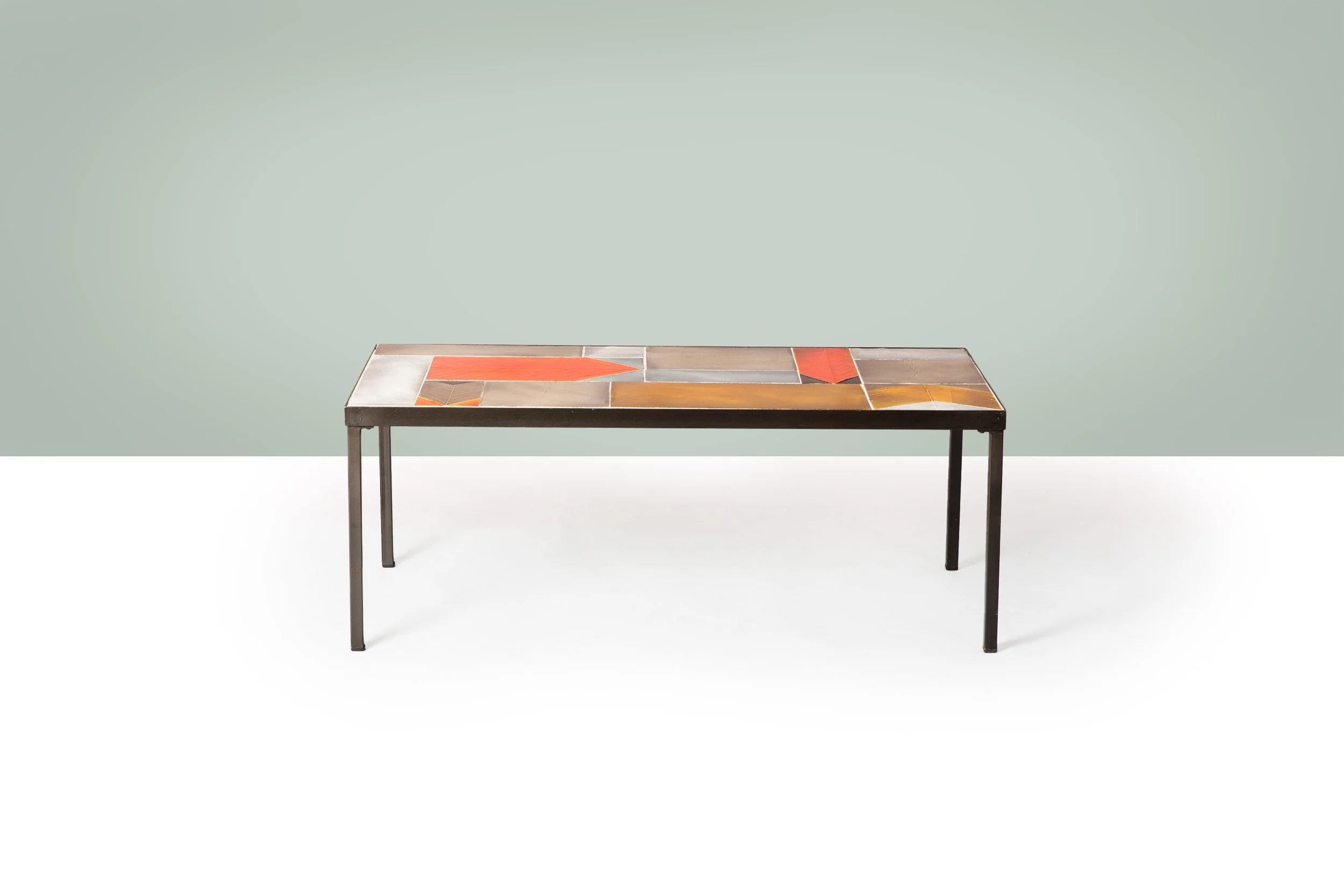
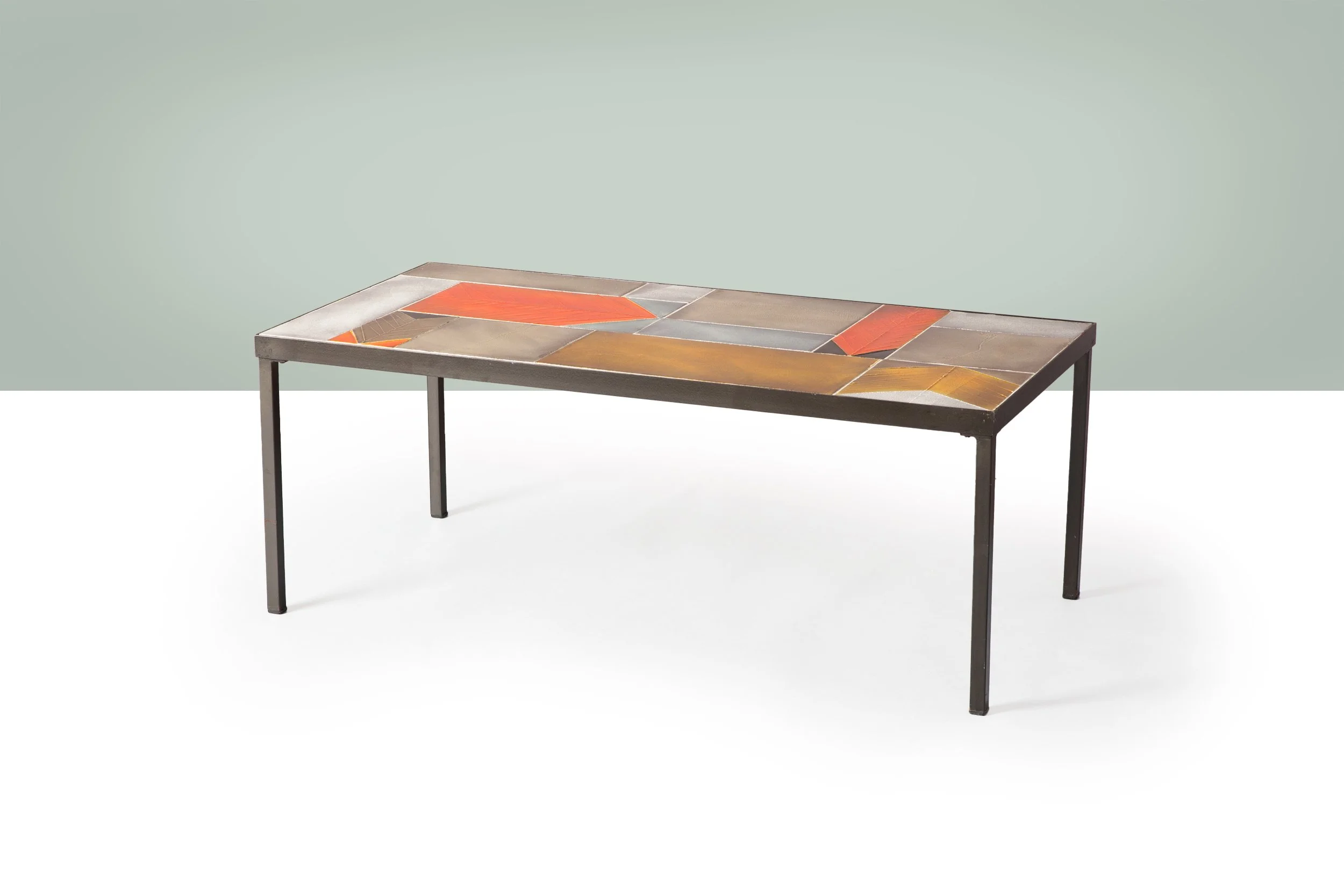
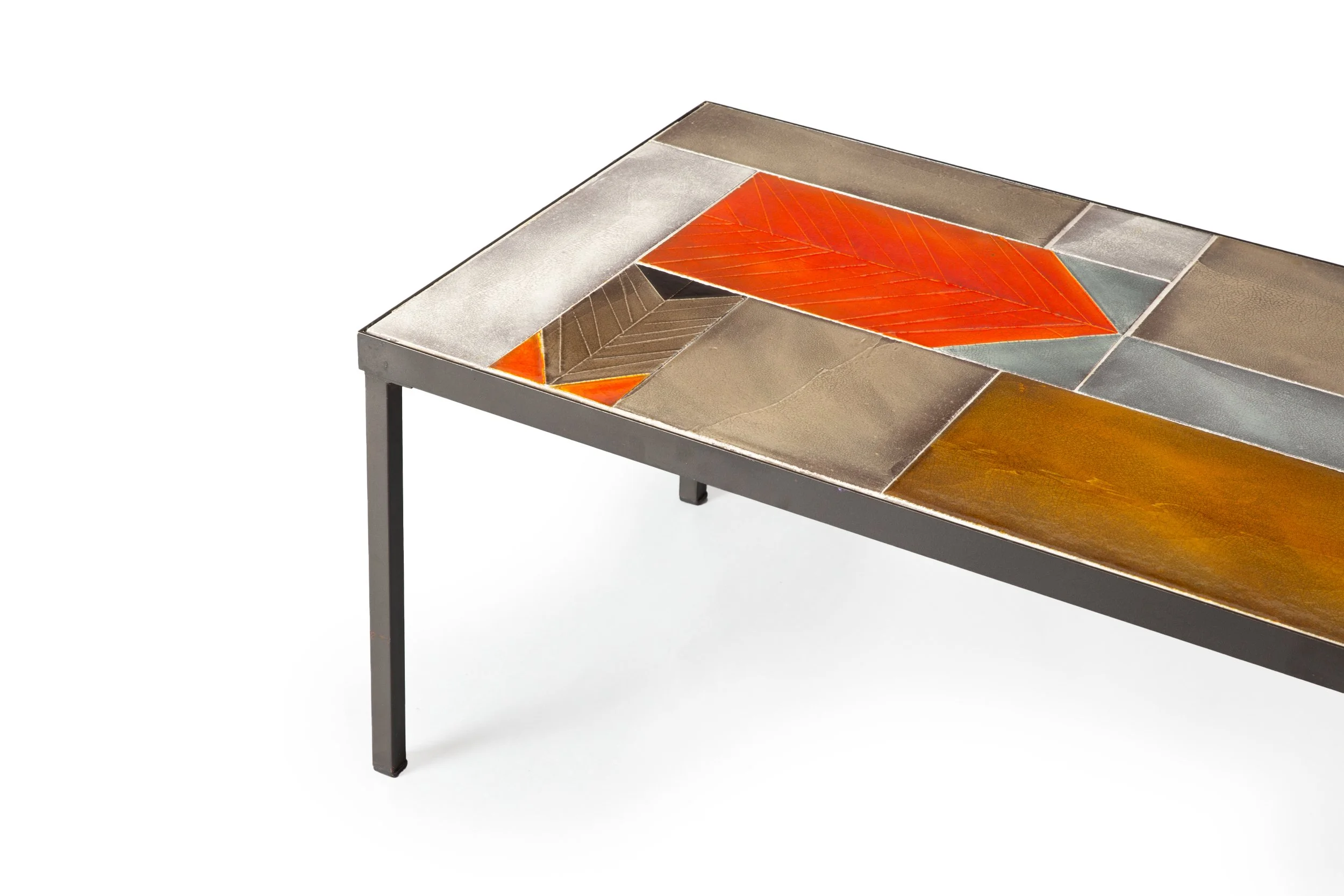
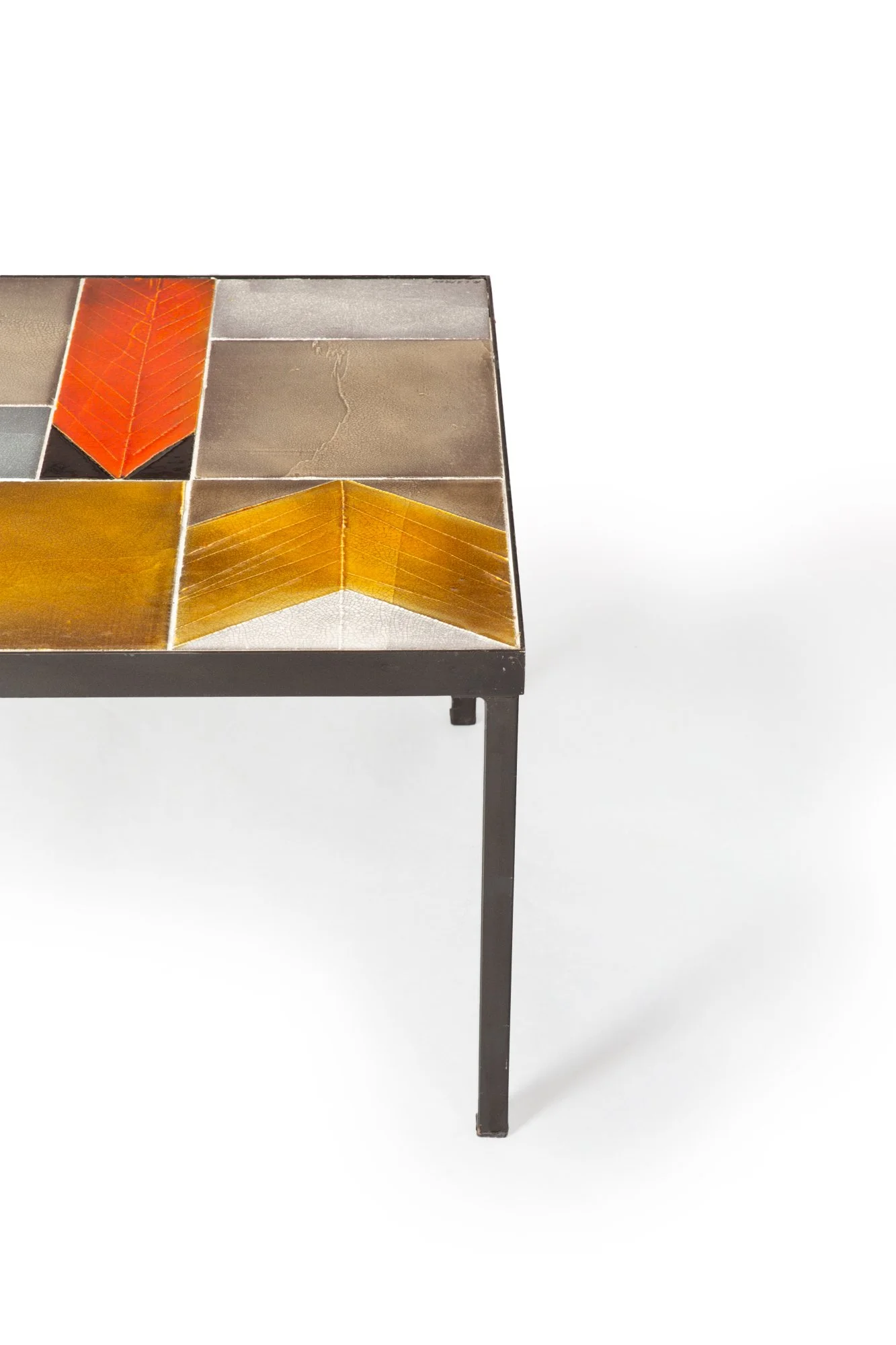
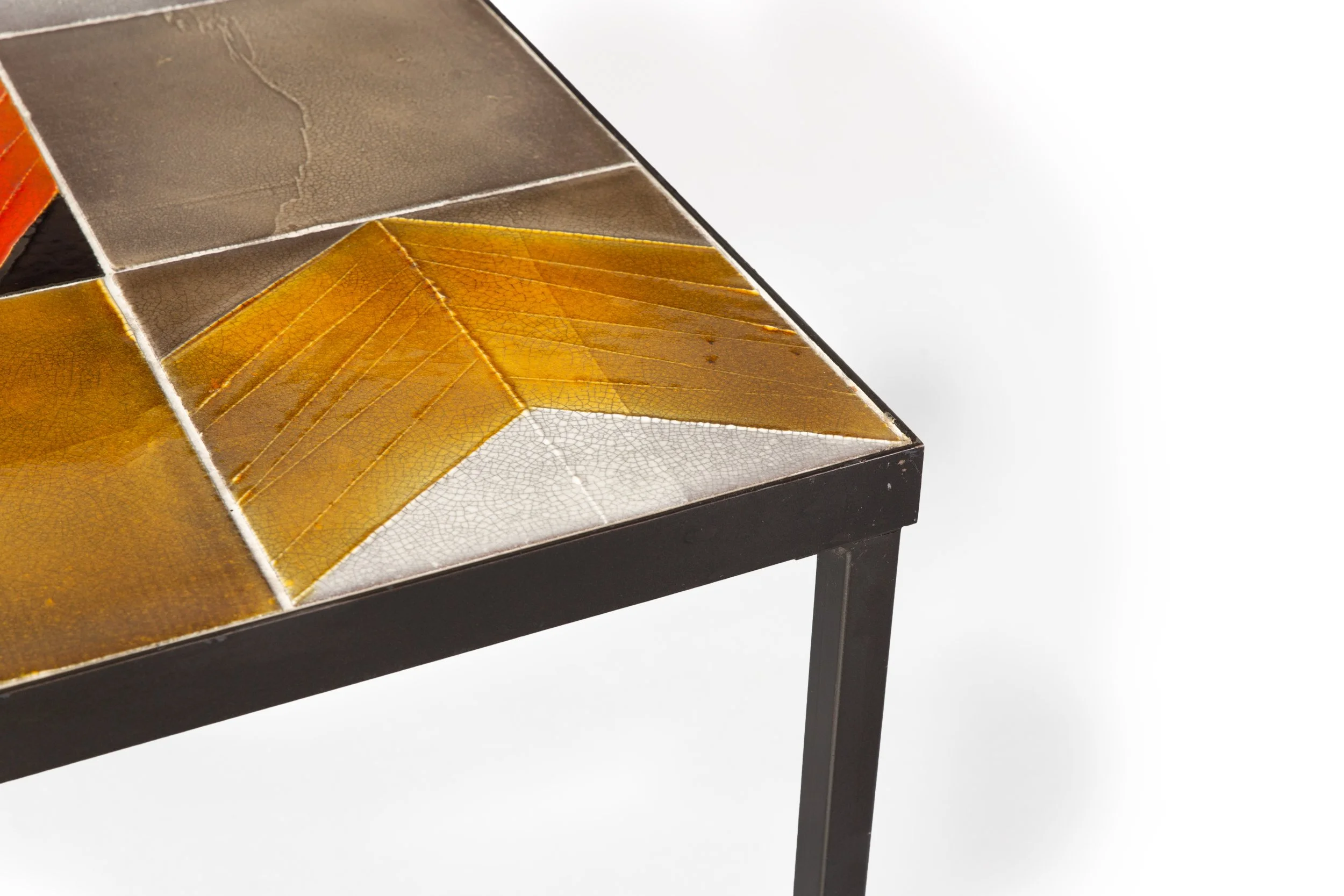
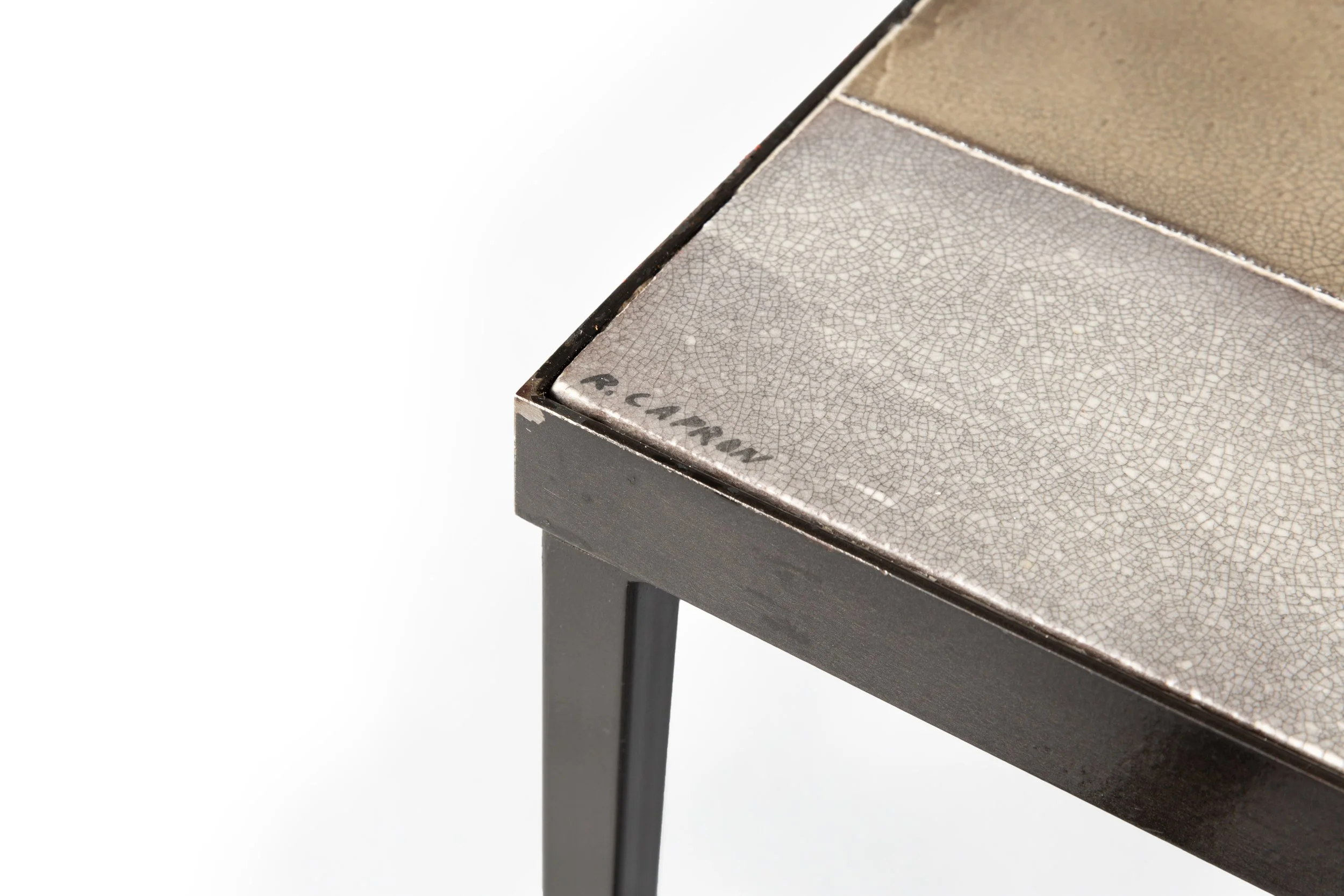
With its restrained metal frame and vividly composed ceramic surface, this coffee table captures Roger Capron’s distinctive ability to bring the language of modern art into the domestic interior. The tabletop is conceived almost as a small abstract composition: irregular geometric tiles in ochre, terracotta, cream, grey and flashes of vermilion are assembled into a rhythmic field, their varied shapes and subtle tonal shifts giving the surface the quality of a hand-built collage.
Born in Vincennes in 1922, Capron trained at Paris’s École des Arts Appliqués before moving to Vallauris in 1946, where he helped establish the town as one of post-war France’s great centres of modern ceramics. Together with Robert Picault and Jean Derval, he founded the Atelier Callis, embracing a philosophy inherited from his teacher René Gabriel: to bring beauty into everyday objects. CCapron Céramiques+1
Capron’s practice soon expanded beyond traditional pottery. In the 1950s and 1960s he developed a particularly inventive approach to furniture, incorporating glazed ceramic tiles into tables and architectural surfaces. His workshop grew from a small pottery into a substantial manufactory, producing ceramic work for interiors as well as objects for everyday use. By the 1960s, tables had become an important part of his vocabulary, allowing his experiments with colour, relief, geometry and glaze to occupy the architectural scale of furniture. RRoger Capron+1
This table exemplifies that meeting of ceramic craft and modernist furniture design. Its deliberately spare frame acts almost as an architectural armature, leaving the ceramic top to become the principal visual event. Rather than treating ornament as something applied to furniture, Capron makes the surface itself the work: tactile, irregular and unmistakably handmade.
There is a characteristic tension in the piece between industrial geometry and the warmth of the ceramic. The rectilinear structure gives it a distinctly mid-century clarity, while the hand-glazed tiles introduce variation and imperfection. It is precisely this dialogue—between the disciplined and the expressive—that gives Capron’s furniture its enduring presence.